Добавлена поддержка ЭЧ/Ech (ex-Escapechan) и Ежчана (ejchan.net, ejchan.site). Набегаем, тестируем архивацию, сообщаем о замеченных проблемах.
К сожалению, значительная часть сохранённых до 2024 г. изображений и видео была потеряна (подробности случившегося). Мы призываем всех неравнодушных помочь нам с восстановлением утраченного контента!

Мартина Хайдеггера Тред (МХТ)

 Аноним 25/04/25 Птн 23:03:20 #1 №174185 
Хайдеггер Палец вверх.webp
Хайдеггер с семьей гномик.jpg
Тред обсуждения не философа, но денкера
Аноним 25/04/25 Птн 23:03:39 #2 №174186 
Буду может тут че-нибудь писать по прочитанному или просто цитатки кидать
Аноним 25/04/25 Птн 23:05:14 #3 №174187 
Чтобы вызвать будапешт у всякого рода логиков:

Втянутый в самоудаление, в тяг в него, и таким образом указывая в уход, впервые и становится человек человеком... Втянутый в тяг самоудаления, человек есть знак.

Gezogen in das Sichentziehende, auf dem Zug in dieses und somit zeigend in den Entzug ist der Mensch allererst Mensch... Auf dem Zug in das Sichentziehende gezogen, ist der Mensch ein Zeichen.

Хайдеггер, Что значит мыслить? (Bd 7)
Аноним 25/04/25 Птн 23:06:23 #4 №174188 
Интерес, проявляемый к философии никоим образом не свидетельствует о готовности мыслить. И то, что мы годами упорно занимаемся сочинениями великих мыслителей, еще не гарантирует того, что мы мыслим или хотя бы готовы учиться мыслить. Занятие философией может даже создать нам стойкую иллюзию того, что мы мыслим, раз мы «философствуем».

Хайдеггер, Что значит мыслить? (Bd 7)
Аноним 25/04/25 Птн 23:06:49 #5 №174189 
Мышление и поэзия, память и саги:

Память — это собрание воспоминаний о том, что должно осмысляться (zu-Bedenkende) прежде всего другого. Это собрание прячет в себе и укрывает у себя то, что всегда следует мыслить в первую очередь... Память, собранное воспоминание о том, что требует осмысления (zu-Denkende), — это источник поэзии. Соответственно этому, и сущность поэзии имеет основание в мышлении. Об этом говорит нам миф, т.е. сказание (die Sage). Его сказывание называет самое старое, самое раннее не только в смысле отсчета времени, но и потому, что оно по самой своей сущности было, есть и будет более всего достойным мышления (Denkwürdigste).

Хайдеггер, Что значит мыслить? (Bd 7)
Аноним 26/04/25 Суб 06:18:34 #6 №174196 
174563704110298138.jpg
>>174185 (OP)
Аноним 28/04/25 Пнд 20:26:55 #7 №174295 
Dies ist das Wesen der Gelassenheit, in die das Gegnen der Gegnet den Menschen vergegnet. слов das Gegnen, die Gegnet и vergegnen не существует
Аноним 29/04/25 Втр 07:49:49 #8 №174308 
>>174185 (OP)
https://youtu.be/NMPERCvxXTo?si=cpQ757KRRz1ws6X5
Аноним 02/06/25 Пнд 20:33:43 #9 №175857 
Без-божное мышление, которое должно оставить Бога философии, Бога как Causa sui, возможно, ближе к божественному Богу.

Das gott-lose Denken, das den Gott der Philosophie, den Gott als Causa sui preisgeben muß, dem göttlichen Gott vielleicht näher.
Аноним 02/06/25 Пнд 21:43:12 #10 №175859 
53.png
52.png
Аноним 03/06/25 Втр 18:18:24 #11 №175870 
Hende hoch! коричневые
Аноним 03/06/25 Втр 23:52:37 #12 №175886 
c859bfc09bdbc34849f3e06767453986.jpg
image.png
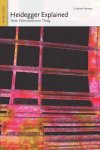
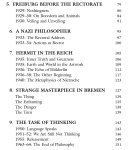
Спекреалист Грэм Харман оказывается еще в 2007 написал то ли хайдеггероведческую, то ли научно-популярную книжку про Хайдеггера. Я ее нашел по ссылке во вполне серьезной современной монографии на немецком (!). и обратил внимание на фамилию автора после того как минут 20 читал Не супер глубоко конечно и довольно коротко, но для введения вполне сойдет. Оглавление удобно био-библиографически построено https://libgen.gs/edition.php?id=136460592
Аноним 04/06/25 Срд 00:00:46 #13 №175887 
Прикиньте иметь возможность читать книги на немецком и английском через месяц после того как они выходят, у себя дома, скачав за 10 секунд. Еще 20 лет назад даже близко такой возможности не было, про СССР вообще молчу.

Если ввести в поиск либгена любого философа и отсортировать по дате, там ппц сколько материала именно последних лет, идеальные документы для печати
Аноним 05/06/25 Чтв 10:26:07 #14 №175936 
image.png
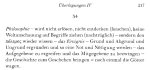
Философия — не спасёт, не откроет (через исследование), не приведет мировоззрение к понятиям (постфактум) – но снова узнает πόλεμος — Событие [О-своение] — до дна исследует Основание, Бездну (Abgrund) и Безосновное (Ungrund) и так станет нуждой и принуждением — овладеть тем, что дано как задача и тем, что дано как дар — привести историю к свершению = еще раз отважиться на богов.

Schwarze Hefte II-VI, 217
Аноним 05/06/25 Чтв 10:27:38 #15 №175937 
Уход, освобождающий место для обитания, или сокрытие, раскрывающее сущее, — это зияние, которое лишает основания и в то же время дает основание в своем бездном пространстве. Это без-основное — священное.

Capobianco, Heidegger and the Holy (2022)
Аноним 05/06/25 Чтв 10:28:16 #16 №175938 
Das Fragen ist die Frömmigkeit des Denkens

Questioning is the piety of thinking

Вопрошание есть благоговение/послушание/почтительность/благочестие Мышления
Аноним 05/06/25 Чтв 17:44:30 #17 №175945 
1000009904.jpg
Пока почти не читал, но уже осуждаю. Конкретно, прочитал главу "отсылание и знак", так как этот вопрос мне очень хорошо знаком (читал как "verbal behavior" Скиннера, так и из современного - все основные тексты по relational frame theory на эту тему). Что могу сказать, этот ваш Хайдеггер, как и все остальные до Скиннера, так и не смогли вылезти за пределы одного вербального операнта ("tact", от "make contact with"), то есть, ничего нового и интересного в этой теме не сделал. Ну и в целом, потуги объяснить чисто экспириентальные и контекстно-зависимые явления через что-то онтологическое, больше похожи на попытки снять брюки через голову, чем на серьёзное исследование. Я, конечно, ознакомлюсь для общего развития, но...
Аноним 21/06/25 Суб 13:55:38 #18 №176309 
Если мы втянуты в самооттягивающееся, то мы уже находимся в тяге в самоттягивающееся, в загадочную и потому изменчивую близость его. Когда человек находится в этом тяге собственным образом, тогда он мыслит, пусть даже он еще слишком далеко от самооттягивающегося, пусть даже это оттягивание остается как всегда сокрытым. Сократ всю свою жизнь, вплоть до самой его смерти, не делал ничего другого, кроме того, что вставал в сквозной ветер этого тяга и в нем себя удерживал. Поэтому он есть самый тонкий мыслитель Запада. Поэтому он ничего не писал. Ибо тот, кто начинает писать, находясь в мышлении, неизбежно уподобляется тем людям, которые от слишком сильного сквозного ветра сбегают на подветренную сторону. Остается тайной еще скрытой истории то, что все мыслители после Сократа, без ущерба для их величины, должны были стать такими беглецами. Мышление вошло в литературу. Это решило судьбу западной науки, которая через doctrina Средневековья стала scientia Нового времени. В этой форме все науки возникли из философии двояким образом. Науки происходят из философии тем, что они ее оставляют. Возникшие таким образом сами по себе как науки уже никогда не могут сделать обратный прыжок в свой источник. Они остаются теперь вверенными той сущностной области, в которой их может обнаружить только мышление при условии, что оно само способно к своем делу.
Аноним 23/06/25 Пнд 18:53:38 #19 №176367 
Кем надо быть, через что пройти, чтобы понять хотя бы одно предложение от этого деда.
Аноним 23/06/25 Пнд 20:36:37 #20 №176371 
>>176367
На русском ваще нет смысла читать. Потому что Бытие и время переведено Бибихиным, а поздние тексты просто непереводимы. На русский выходящие поздние переведены очень плохо, поэтому лучше читать на английском и оригинальные слова смотреть (и пытаться понять что означают эти выдуманные через раз Хайдеггером слова).
Ну еще вспомогательную литературу читать. Например словарь (есть еще два, Inwood и Schalow) https://libgen.gs/edition.php?id=146757783
По позднему Хайдеггеру неплохая книга https://libgen.gs/edition.php?id=136687060
Аноним 24/06/25 Втр 07:57:16 #21 №176380 
>>176367
Послушай для начала "Heidegger explained Jade Vine" на ютубе. Хорошо разбирает. На английском, очевидно.
Аноним 24/06/25 Втр 08:29:02 #22 №176381 
>>176371
Ну, допустим, я даже почитаю. Разве я пойму нахуй что-то?Неужели вся сложность Хайдеггера просто в ограниченности русского языка?
Аноним 24/06/25 Втр 08:36:36 #23 №176383 
>>176381
Да сложность любой философии в сложности языка, если ты и Флоренского или Соловьева какого-то откроешь, будешь не понимать потому что не знаешь значения слов, для понимания которых надо пять лет историю философии изучать
Аноним 02/07/25 Срд 15:50:31 #24 №176510 
Анон, что такое Dasein? Правильно ли я понимаю, что это "знание о бытии", понятие о том, что ты есть в данный момент?
Аноним 02/07/25 Срд 16:53:36 #25 №176511 
>>176510
Ты описал только один из шести экзистенциалов (структур дазайна) In der Welt sein - бытие в мире. И то не исчерпывающе.
Аноним 02/07/25 Срд 21:30:56 #26 №176514 
>>176511
Это понимающее бытие сущее. Сущее, экзистирующее как свое "вот". Способ его бытия – экзистенция. Структура его бытия (экзистенции) – забота. Смысл его бытия – временность.
https://bigenc.ru/c/dasein-363f2b
https://drive.google.com/file/d/1JLMfbRW5nOwDM0yt4y2hovFMGRrNa9La/view
Аноним 02/07/25 Срд 21:31:24 #27 №176515 
Блин не туда >>176514 >>176510
Аноним 04/07/25 Птн 01:48:23 #28 №176522 
Бл что здесь забыл
Аноним 28/07/25 Пнд 13:00:12 #29 №177028 
Хайдеггер первый придумал отложенные сообщения
Аноним 28/07/25 Пнд 18:02:51 #30 №177042 
А нахуя его читать, ну вот чтобы что?
Аноним 29/07/25 Втр 22:00:04 #31 №177100 
41lyE-eQm9L.UF1000,1000QL80.jpg
Im ersten Anfang west das Seyn als Aufgang (φύσις); im anderen Anfang west das Seyn als Ereignis. (GA 69)

Не буду пытаться переводить, не знаю как не нелепо перевести west.
(In the first inception, beyng essences as emergence [phusis]; in the other inception, beyng essences as adaptation)

Хорошая книга: https://annas-archive.org/md5/ad920b8b4bbed2e800998f8e47c95b10 Wrathall кажется крутой чувак. На википедии пишут, что мормон. А это >>175886 на самом деле говно, но как совсем вводное вред не нанесет наверное (а кто интересуется всерьез спекреализмом все равно глубоко изучать Хайдеггера не будет и не сможет)
Аноним 04/08/25 Пнд 03:38:20 #32 №177275 
490x350.jpg
>>177042
Чтобы выебываться, очевидно же!
Аноним 06/08/25 Срд 23:33:30 #33 №177420 
>>177042
Люди считают, что все познается на собственном опыте и тут же в подтверждение слышат: «философия — пустое дело»; «проку от нее никакого». Обе фразы, которые особенно в ходу у учителей и ученых-исследователей, выражают мнения бесспорно справедливые. Кто в противовес им пытается доказать, что вдруг «прок какой-нибудь да есть», только усиливает и закрепляет господствующее лжетолкование, основанное на предвзятом мнении, будто к философии можно подходить с обыденной меркой, годной для определения надежности колес или действенности целебных ванн. Это совершенно справедливо, да и лучше не скажешь: «Проку от философии — никакого».
Аноним 08/08/25 Птн 17:54:41 #34 №177511 
Сказывание и слушание только в том случае настоящие, если они сами по себе направлены сначала на бытие, логос. Только там, где оный открывается, словозвук становится словом. Только там, где улавливается открывающееся бытие сущего, простое подслушивание становится слышанием. Те же, которые не постигают λόγος, — те «не в состоянии ни слышать, ни говорить» (фр. 19). Они не способны привести свою сиюбытность к стоянию в бытии сущего. Только те, которые способны на это, владеют словом; это поэты и мыслители. Остальные блуждают в кругу собственного своемыслия и неразумия. Они считаются только с тем, что попадается на их пути, что им льстит и что им известно. Они как псы: «ибо псы лают на каждого, кого они не знают» (фр. 97). Они — ослы: «ослы мякину предпочитают золоту» (фр. 9). Они продолжают повсюду заниматься делами сущего. Но бытие остается для них сокрытым. Бытие недостижимо и неосязаемо, его нельзя ни слышать, ни обонять. Бытие есть все, что угодно, но только не туман и не дым: «если бы все сущее обратилось в дым, нашлись бы носы, которые бы различили это и учуяли» (фр. 7) [ссылка на цитату Ницше ранее «бытие есть последний дымок улетучивающейся реальности», «Бытие — туман и химера»]

Введение в метафизику
Аноним 08/08/25 Птн 19:32:51 #35 №177514 
image.png
image.png
Хайдеггер тут говорит, что проблема традиционной метафизики в том, что она на самом деле остается физикой. Поэтому например в ней не может быть спрошен вопрос о человеке, который есть не антропологический, но "исторически мета-физический" (Введение в метафизику).

То есть в каком-то смысле разделяет метафизику (отстой) и мета-физику (класс).
Физика в этой концептуализации занимается физическим, physikos (= сущим), а physis как бытие сущего находится над физическим (сущим).

Но возможно он все это потом передумает с Другим Началом, которое хочет стартовать с Ereignis, а не с physis >>177100
Еще в этой работе он говорит, что logos и physis суть одно и то же, и то и другое — бытие сущего у греков.
А "греки" кстати это Гераклит и Парменид. Они — основатели "Denkertum" (несуществующее слово). Поздний Хайдеггер если че отринет философию и будет заниматься Denkertum >>174185 (OP)
Еще в другой работе натыкался на "Гераклит и Парменид еще не были «философами». Почему? Потому что они были более великими мыслителями." (1955)

Хотя кстати говоря насколько я понимаю вот эти комментарии в квадратных скобках добавлены Хайдеггером в 1953 г., в что ни на есть поздний период

Не знаю, он бы еще тогда себя мета-физиком называл. И борцом с метафизикой
Аноним 08/08/25 Птн 19:44:22 #36 №177515 
Я пока что не понимаю
1) Как соотносятся первое начало и второе. Что делать с Гераклитом и Парменидом, Хайдеггер с ними согласен или нет, что он с их мышлением собирается делать?
2) Что такое сущее в целом с точки зрения второго начала. Каков ответ на вопрос "почему есть сущее, а не ничто"
Ну и все еще довольно туманно представляю что такое Ereignis, Lichtung и Gegnet.
Еще во "Времени и бытии" я вообще ничего не понимаю, что такое Geben, Geschicken, Reichen
Аноним 10/08/25 Вск 10:37:39 #37 №177595 
https://insolarance.com/devalvation-of-autentity/
е2
Аноним 13/08/25 Срд 21:05:21 #38 №177747 
Jahrtausende zu sein! zu denken!
Schließ mich in beide Arme ein:
Hast Du kein Glück mehr mir zu schenken —
Wohlan — noch hast Du Deine Pein.
Аноним 13/08/25 Срд 21:07:31 #39 №177748 
>>177747
>Pein
Творчество – это свободное созидание. Свобода есть только там, где есть принятие на себя ноши. В творчестве всегда в соответствии с его характером эта ноша – необходимость и нужда, заставляющая человека нести груз в душе, отчего на душе у него тяжело. Всякое творческое действование совершается в тяжелом, печальном настроении – знаем ли мы об этом или нет, многословим ли на этот счет или не делаем этого. Всякое творческое действование совершается в тяжелом настроении, хотя не всякая печаль – творческая. Об этой взаимосвязи творчества и меланхолии знал уже Аристотель, когда спрашивал: «по какой причине все мужи, совершившие нечто огромное, будь то в философии, политике, поэзии или изобразительных искусствах, кажутся меланхоликами?».

<...> Как творческое, сущностное действие человеческого вот-бытия философия пребывает в фундаментальном настроении печали. Она касается формы, а не содержания философствования и с необходимостью заранее обнаруживается как то основное настроение, которое очерчивает собой содержательную сторону философского вопрошания.

Основные понятия метафизики
Аноним 14/08/25 Чтв 22:26:25 #40 №177770 
>>177748
Сомнительно
Аноним 15/08/25 Птн 05:19:09 #41 №177773 
>>177770
>Сомнительно
Но окей?
Аноним 30/08/25 Суб 19:13:29 #42 №178262 
image.png
Аноним 01/09/25 Пнд 18:51:14 #43 №178365 
Какие характеристики можно приписать дасману? Что определяет этого человека? Какие качества?
Аноним 02/09/25 Втр 00:29:38 #44 №178378 
>>178365
У дасмана по утрам хуй колом торчит.
Аноним 02/09/25 Втр 13:12:07 #45 №178392 
99.png
>>178378
Аноним 02/09/25 Втр 22:37:12 #46 №178427 
>>178365
>>178378
>>178392
А какие характеристики можно приписать дасвуману?
Аноним 02/09/25 Втр 23:19:36 #47 №178430 
>>178427
Есть у меня некоторые интуиции на этот счёт, но для начала ответьте на мой вопрос.
Аноним 02/09/25 Втр 23:22:19 #48 №178431 
>>178430
Какой вопрос? Я мимокрок.
Аноним 03/09/25 Срд 11:46:36 #49 №178447 
>>178431
>>178365
Аноним 20/09/25 Суб 22:01:32 #50 №179025 
http://web-corpora.net/wsgi/oldrus.wsgi/results/СУЩЕСТВИЕ
Аноним 21/09/25 Вск 15:21:08 #51 №179028 
>>179025
>СУЩЕСТВИЕ
ЧЕРВИЁ
Аноним 11/05/26 Пнд 14:19:32 #52 №183479 
>>177275
Это интересная версия, но он всё же увлекался бытием и временем.
Аноним 19/06/26 Птн 18:05:42 #53 №184122 
>>174187
Думаю Zeichen тут не знак а скорее указатель, ну т.е. человек это указатель на точку смерти. И entziehen по-моему можно перевести скорее как вытягивающее... Так что всё логично, "втянутый в самоудаляющее, втянутый в это движение и этим указывающий на удаление, есть человек в наибольшей степени человек... втянутый в двжиение к самоуничтожающему человек есть указатель"

В связи с этим можно поднять вопрос о языке - можете начинать набрасывать.
sage[mailto:sage] Аноним 05/07/26 Вск 12:59:35 #54 №184464 
!.png
Ни Витгенштейн, ни Хайдеггер так за всю жизнь и не ответили на центральную проблему их философий: в чём заключается ценность [акта/("трансцендентальной") способности/"faculty"] "вопрошания"?...
Аноним 06/07/26 Пнд 23:05:46 #55 №184471 
Human Condition gilmancontemporary-tom-chambers-spring-s-landfall Human Condition.webp
>>184464
define "ценность". Для Хайдеггера это плохое слово деконструированное, для Витгенштейна наверное нет такого слова в мысли поблизости.
Про особость вопрошания у Хайдеггера читай "Введение в метафизику", там есть эквилибристика про то что вопрошающее бытие это что-то особенного (для самого бытия)

По реальному Ницше "ценность" это что-то по определению неценное, инструмент, средство для — причем все "для" сводятся к воле к власти, а воля к власти это слепая ерундовина, по отношению к которой очень свободный ум находится jenseits. Благодаря чему и может "переоценивать ценности". И скармливать нпцшкам, народу, законодательствовать. А может всего этого и не делать

По Хайдеггеру лучше говорить об "онтологической роли" вопрошания (зачем вопрошание бытию? почему есть вопрошание, а не знание?). Или как в религиях к примеру объясняется тотальная неизвестность, перед которой стоит человек, если он честный (набожный, хочет познать "Бога", а не выдумать удобного, "ценного"). Как-то объясняется, можно набор разновидностей найти

>Витгенштейн
Единственное место где ценности в ЛФТ 6.41
Аноним 07/07/26 Втр 14:36:17 #56 №184472 
Каких философов нужно читать/на какие направления и школы стоит обратить особое внимание, что бы понять Бытие и Время?
Аноним 07/07/26 Втр 15:31:47 #57 №184473 
Untitled.png
image.png
>>184472
Феноменологию, неокантианство. Книга хрень на самом деле, это и есть феноменология+неокантианство+философская_антропология. Философская антропология (особенно Гелен) даже интереснее. Хайдеггер эту книгу написал потому что у него требовали публикации, и он даже не дописал ее. Надоело

Самое интересное в "Бытии и времени" это заявленная в плане работы II часть. То есть все последующее творчество Хайдеггера

---

Еще кроме перечисленного конечно важна Метафизика Аристотеля, а конкретно ее срединные книги про бытие. Но чтобы их понять, нужно намного больше времени и знаний, чем для БиВ Х. (древнегреческий язык учить надо и обучаться работать с гуманитарным исследовательским аппаратом)

Ну и средневековая онтология важна. На эти темы можно порекомендовать Введение в книге "Основные проблемы феноменологии" (пикр2). Да и Введение в БиВ можно сразу читать
Аноним 09/11/26 Пнд 23:03:21 #58 №186932 
Hen = Es
Hen Polla = Sein
Hen kai Polla = Seiende im Ganzen
Polla = Seiende
Аноним 14/11/26 Суб 23:21:31 #59 №187005 
Похоже, что сейчас в мире набирает популярность примитивная и хрупкая в своих основах философия истории Шпенглера, которую мы оставили позади уже три десятилетия назад. Это не вселяет особого оптимизма в отношении готовности вступить в диалог с глубоким мышлением. То, как люди считают, что с Ницше уже покончено, говорит само за себя.

Es scheint, daß jetzt die in ihren Fundamenten brüchige und primitive Geschichtsphilosophie Spenglers, die wir schon vor drei Jahrzehnten hinter uns brachten, in der Welt Schule macht. Das gibt nicht allzuviel Hoffnung auf eine Bereitschaft, sich einem wesentlichen Denken zur Auseinandersetzung zu stellen. Die Art, wie man meint, mit Nietzsche fertig zu sein, spricht deutlich.

Band 97 Anmerkungen I–V (Schwarze Hefte 1942–1948)
@nietzschemania 14/11/26 Суб 23:22:23 #60 №187006 
«Феноменология духа» Гегеля (1807 г.) представляет собой предпоследний этап в Эсхатологии Бытия; «Так говорил Заратустра» Ницше (1883/84 гг.) — последний.

Hegels Phänomenologie des Geistes (von 1807) ist die vorletzte Phase in der Eschatologie des Seyns; Nietzsches »Also sprach Zarathustra« (1883/4) ist die letzte.

Band 97 Anmerkungen I–V (Schwarze Hefte 1942–1948)
N. c H. Аноним 21/11/26 Суб 09:00:59 #61 №187113 
What happens is that Nietzsche's Thus Spoke Zarathustra begins to look like something considerably more radical than a philosophical system: an attempt to transform the human being's fundamental relationship to Being, temporality, valuation, embodiment, and the earth. And if we follow this project through Heidegger while refusing to accept Heidegger's final interpretation of Nietzsche as the thinker who completes Western metaphysics, something very interesting becomes possible.
We can construct a philosophical trajectory that is neither simply Nietzschean in the conventional sense nor Heideggerian in Heidegger's own conclusions. It would be a Nietzschean transformation of the Heideggerian question of Being.

The essential move is this:
We take Heidegger's depth of questioning seriously, but we refuse his final subordination of Nietzsche to the history of metaphysics. We allow Nietzsche to challenge Heidegger in return.
This means that we should not begin by asking what Nietzsche's doctrines mean. We should ask what kind of human existence they are attempting to make possible.

I would develop this through several interconnected transformations.

1. Zarathustra: not a teacher of doctrines, but an agent of transformation
The conventional interpretation tends to isolate three principal doctrines:
- The Übermensch: the overcoming of the present human being.
- Eternal recurrence: the recurrence of all things, or the supreme affirmation of existence.
- The will to power: the fundamental character of life and becoming.
But these doctrines become much more interesting when understood as moments of a single existential undertaking.
Zarathustra does not merely communicate propositions. He descends from his solitude, speaks, withdraws, experiments with forms of communication, encounters resistance, and repeatedly discovers that his own teaching must undergo transformation.
His task is not simply to convince people that the Übermensch should exist. It is to cultivate the possibility of a different kind of human being: one capable of inhabiting existence without appealing to a transcendent justification of it.
This changes the meaning of overcoming.
The human being is not overcome merely by becoming stronger, more intelligent, or more powerful. It is overcome insofar as it ceases to understand itself through the inherited structures of value that make its existence dependent upon something beyond earthly life.
The transformation is therefore simultaneously:
- Ontological: a different relationship to Being and becoming.
- Temporal: a different relationship to past, present, and future.
- Axiological: a different relationship to the creation and destruction of values.
- Existential: a different relationship to suffering, finitude, embodiment, and possibility.
- Ecological, in a broad philosophical sense: a different relationship to the earth and its forms of life.
The last point is particularly important. Zarathustra's affirmation of the earth is not simply a preference for nature over religion. It is a refusal to understand earthly existence as an inferior copy of another, supposedly more real existence.
The earth must become the horizon of affirmation, not something from which human beings must escape.

2. Heidegger: the question of Being becomes unavoidable
This is where Heidegger becomes indispensable.
Heidegger's fundamental question is not what beings are, but what it means for beings to be at all.
He distinguishes between beings (Seiendes) and Being (Sein). The distinction matters because Western philosophy, in his account, has repeatedly investigated the nature, causes, grounds, and properties of beings while neglecting the question of the meaning of Being itself.
Now consider Nietzsche from this perspective.
Nietzsche's critique of Platonism, Christianity, metaphysical dualism, and the distinction between the true world and the apparent world can be understood as an attempt to transform the horizon within which human beings encounter what is.
The important point is that Nietzsche does not simply replace one conception of Being with another.
He challenges the entire evaluative structure through which the world has been divided into:
- A supposedly true world and an apparent world.
- Eternal Being and transient becoming.
- Spirit and body.
- Beyond and earth.
- Absolute values and earthly valuations.
His declaration that the true world has become a fable is therefore not merely an epistemological statement. It has existential and ontological consequences.
The human being who no longer believes in a transcendent world must learn to inhabit this world differently.
Here we can appropriate Heidegger's question while retaining Nietzsche's answer.
Heidegger asks: What is the meaning of Being?
Nietzsche, read through Zarathustra, invites another formulation:
What would it mean to exist in such a way that becoming, transience, multiplicity, and the earth are no longer experienced as deficiencies of Being?
This is a decisive reversal.
We do not need to accept Heidegger's argument that Nietzsche's philosophy remains trapped in metaphysics because it interprets Being as will to power and beings in their totality as eternal recurrence.
We can instead argue that Nietzsche is attempting to overcome the very existential consequences of the metaphysical interpretation of Being.
There is, admittedly, a difficulty here: Nietzsche does not formulate Heidegger's distinction between Being and beings, and we should not pretend that he does. Our project is a philosophical reconstruction, not a claim that Nietzsche secretly anticipated Heidegger.
But the reconstruction opens a productive possibility: Heidegger gives us the question; Nietzsche gives us a radically different direction in which to pursue it.

3. Will to power: not simply domination, but the structure of creative becoming
Heidegger interprets the will to power as Nietzsche's answer to the question of the essence of beings.
In his reconstruction:
- Will to power names the essentia of beings.
- Eternal recurrence names their existentia.
Together they constitute Nietzsche's fundamental metaphysical position.
This is central to Heidegger's interpretation in the Nietzsche lectures.
But suppose we refuse to reduce will to power to a metaphysical principle explaining everything that exists.
What if we understand it instead through the transformative dynamics of life?
The important element is not the possession of power but the overcoming of an established configuration of forces.
Life does not merely preserve itself. It interprets, reorganizes, appropriates, differentiates, creates, and surpasses its existing forms.
Power, in this sense, is inseparable from transformation.
This gives us a different understanding of the Übermensch.
The Übermensch is not simply the strongest individual within an already established hierarchy. Nor is it an ideal human specimen that humanity should mechanically reproduce.
It represents a transformation in the very capacity to create possibilities of existence.
The Übermensch is the figure through which human existence becomes capable of going beyond its inherited self-understanding.
And this means that the overcoming of the human being is not a final destination. It is an ongoing process of self-transformation.
Here Nietzsche can be brought into productive tension with Heidegger's conception of Dasein.
Heidegger understands human existence as the being for whom its own Being is an issue. Dasein is characterized by possibility, projection, thrownness, and being-toward-death.
Nietzsche adds something that Heidegger's existential analytic does not make central in the same way:
The human being must not merely disclose its possibilities; it must become capable of creating and affirming new possibilities of existence.
This is an important difference.
Heidegger investigates the structures that make understanding Being possible. Nietzsche asks what kind of transformation of life would allow human beings to inhabit their possibilities differently.
We can therefore retain Heidegger's existential analysis without accepting that its culmination must be a withdrawal from Nietzschean creation and affirmation.

4. Eternal recurrence: the transformation of temporality
This is perhaps the most important intersection.
Heidegger's treatment of eternal recurrence is particularly revealing because it demonstrates both the power and the limitation of his interpretation.
For Heidegger, Nietzsche's eternal recurrence represents the culmination of Western metaphysics. It establishes the totality of beings as eternally recurring in their sameness.
Heidegger's interpretation connects recurrence with the will to power and ultimately with the completion of metaphysics.
But Zarathustra's encounter with recurrence can be approached differently.
The problem Nietzsche confronts is not simply how time works cosmologically.
It is the relationship between human existence and time.
Consider the problem of the past.
Human beings experience the past as something that cannot be changed. The will wants to move forward, but it encounters something it cannot undo.
Zarathustra identifies this as the problem of the will's relationship to time and its inability to overcome what has been.
The spirit of revenge emerges from this inability.
The will says no to the past because the past is irrevocable.
Nietzsche's response is extraordinarily radical: the will must become capable of willing what has been.
Not merely accepting it as an unavoidable fact. Not forgiving it. Not reconciling itself to it through resignation.
It must affirm it.
This is the significance of amor fati and eternal recurrence.
The question becomes: could you affirm your existence so completely that you would will its return, in every detail, eternally?
The point is not simply psychological optimism.
It is a transformation of the relationship between willing and time.
The past is no longer merely something suffered. The future is no longer merely something anticipated. The present is no longer merely a passing point between them. Existence becomes something affirmed in its entire temporal dimension.
The distinction between Heidegger and Nietzsche becomes especially important here.
Heidegger's existential analysis of temporality emphasizes the unity of future, having-been, and present. His interpretation of Nietzsche, however, ultimately treats recurrence as a metaphysical determination of beings.
Our Nietzschean reconstruction would instead retain the affirmative force of recurrence.
The human being does not overcome time by escaping it, nor by discovering a more primordial temporal structure beyond it.
It overcomes its antagonism toward time by learning to affirm becoming itself.
There is an important scholarly complication: Nietzsche's eternal recurrence has both cosmological and existential interpretations, and the relation between them remains disputed. It would be premature to reduce it to a mere psychological exercise.
The philosophical importance of recurrence, however, does not depend on settling that interpretive dispute in advance.
Its transformative demand remains: become capable of willing existence without requiring that anything essential about it be different.
This is not passivity before fate. It is the highest possible intensification of affirmation.

5. The earth: overcoming the metaphysics of transcendence
Here I think the project becomes especially significant.
Nietzsche's insistence on fidelity to the earth is not an incidental poetic motif. It is one of the fundamental orientations of Zarathustra's entire undertaking.
The earth is not simply the physical planet considered as an object of scientific investigation.
It signifies the actuality of embodied, finite, living existence: the world of becoming, suffering, growth, destruction, reproduction, struggle, and creation.
The problem Nietzsche identifies in the metaphysical and religious traditions is that earthly existence has repeatedly been interpreted through reference to something supposedly higher.
The earth becomes a place of exile, a temporary condition, a realm of imperfection, or an obstacle to salvation.
Nietzsche wants to reverse this relationship.
But we can take the reversal further by bringing it into conversation with Heidegger's later thinking.
In Being and Time, Heidegger develops the idea of being-in-the-world. Human existence is never simply a subject standing opposite an external world. We are already involved in a meaningful world, practically, bodily, historically, and existentially.
In his later philosophy, Heidegger develops the notion of dwelling and the fourfold (Geviert): earth, sky, divinities, and mortals.
Earth is no longer simply a resource or an object standing before a subject. It belongs to a relational happening in which things appear and human beings dwell.
We can retain this insight while refusing Heidegger's more restrictive conclusions about modernity, technology, and Nietzsche.
Nietzsche's affirmation of the earth could give this notion of dwelling a different direction.
Instead of understanding authentic dwelling primarily through a more primordial relation to Being, we might understand it as an affirmative participation in earthly becoming.
The human being does not merely inhabit the earth.
It participates in the earth's creative and destructive processes.
This has several consequences.
First, the body is no longer something that must be subordinated to an allegedly higher spiritual dimension. It becomes the primary site of interpretation, valuation, and transformation.
Second, nature is not merely a collection of objects available for human use. It is the larger field of becoming within which human existence is situated.
Third, human beings must abandon the fantasy of being the metaphysical center of existence.
The earth does not exist for humanity. Humanity exists as one possibility within the earth.
Fourth, dwelling must be understood as a form of participation rather than possession.
This also means that we should be careful not to turn Nietzsche into a contemporary environmental philosopher. His conception of nature includes struggle, hierarchy, destruction, and domination, and it cannot simply be translated into ecological ethics.
Nevertheless, his rejection of the otherworldly orientation can support a profound rethinking of human earthly existence.
Аноним 21/11/26 Суб 09:05:06 #62 №187114 
>>187113
6. Revaluation of values: transforming the conditions under which things become meaningful
Now we arrive at another crucial dimension.
For Nietzsche, the death of God is not simply the disappearance of religious belief.
It signifies the collapse of the highest organizing principle of Western valuation.
The consequences are much deeper than secularization.
If transcendent values lose their authority, then the inherited structure through which human beings interpret good and evil, truth and falsehood, suffering and happiness, life and death becomes unstable.
Nihilism emerges, but Nietzsche does not want merely to replace old values with new ones.
He wants to transform the very capacity for valuation. This distinction is essential.
A conventional reading of the revaluation of all values might suggest that Nietzsche is proposing a new moral code.
But Zarathustra's project is more fundamental. It concerns the formation of a human being who no longer requires transcendent guarantees to create meaning.
This is where Heidegger's critique of value-thinking becomes particularly interesting.
Heidegger argues that when Being is interpreted through the category of value, Being itself is reduced to something posited and evaluated by human beings. Values become determinations of beings within the horizon of the subject's willing.
This is one of the reasons Heidegger considers Nietzsche's philosophy the completion of metaphysics rather than its overcoming.
But we need not accept this conclusion. We can distinguish between two possibilities:
- Creating values as an act of subjective imposition upon an otherwise meaningless world.
- Creating values as an expression of an affirmative participation in the processes of becoming.
The second possibility is much closer to the Nietzschean project we are developing.
Valuation need not mean imposing arbitrary preferences upon existence.
It can mean learning to interpret, organize, and affirm possibilities of life from within existence itself.
The creator of values does not stand outside the world and legislate meaning.
The creator is already involved in the world, and creation emerges from that involvement.
This allows us to retain Nietzsche's radical rejection of transcendent value while taking seriously Heidegger's objection to the reduction of Being to human valuation. We do not need to resolve the tension by abandoning Nietzsche.
We can instead refuse the assumption that Nietzschean value-creation is necessarily equivalent to subjective domination.

7. The human being as a transitional being
There is another important consequence.
The Übermensch should not be understood as the final product of human development.
It should be understood in relation to Nietzsche's image of humanity as a bridge.
The human being is something that must be overcome, but overcoming does not mean reaching a fixed and completed form.
It means transforming the conditions under which human existence understands itself.
Here we can bring together Nietzsche's conception of overcoming and Heidegger's conception of possibility.
Heidegger's Dasein is never simply a finished substance. It exists through possibilities, through projection, through its relationship to what it can become. Nietzsche radicalizes this insight.
Human possibilities are not merely discovered within an already established horizon.
They can be created through the transformation of the human being itself.
This suggests a conception of humanity as an unfinished mode of earthly existence.
The human being is neither the center nor the culmination of Being.
It is a transitional configuration of life, capable of transforming its relationship to itself and the world.
And this transformation is not exclusively intellectual.
It involves the body, affects, instincts, habits, artistic capacities, relationships, forms of community, and modes of inhabiting time.
Zarathustra's teaching is therefore not simply a philosophy to be understood.
It is an invitation to become different.

8. Where we must explicitly refuse Heidegger
At this point, we can identify the precise places where our project diverges from Heidegger.
Heidegger's interpretation | Our Nietzschean position
Nietzsche completes Western metaphysics. | Nietzsche attempts a transformation of earthly existence that need not be exhausted by metaphysical closure.
Will to power names the essence of beings. | Will to power expresses the creative and transformative dynamics of life.
Eternal recurrence determines the existence of beings as a whole. | Eternal recurrence is also an affirmative transformation of the relationship between willing and time.
Nietzsche remains within value-thinking. | Revaluation transforms the conditions of valuation rather than merely establishing new subjective values.
Nietzsche's thought cannot reach the question of Being as Heidegger understands it. | Nietzsche's affirmation of becoming can challenge the assumptions through which the question of Being has traditionally been formulated.
The overcoming of metaphysics requires a different relation to Being. | The overcoming of inherited existence requires an affirmative transformation of the human being's relation to the earth.
This is not to say that Heidegger simply misunderstands everything.
His reading identifies a genuine difficulty in Nietzsche: whether the will to power, interpreted as the fundamental character of all beings, reinstates precisely the metaphysical totalization that Nietzsche's critique of the true world appears to undermine. We should not dismiss that problem.
But we should also question Heidegger's tendency to make the history of metaphysics the ultimate framework within which Nietzsche's thought must be interpreted.
Why must Nietzsche's achievement be measured primarily by whether he successfully escapes metaphysics as Heidegger defines it?
Perhaps this question itself needs to be reversed.
Perhaps Nietzsche is asking something that Heidegger's historical-ontological framework cannot fully accommodate: how existence can become affirmable without requiring a final ground, an ultimate foundation, or a privileged standpoint outside becoming.
That is a different philosophical undertaking.

9. The deeper synthesis: a Nietzschean transformation of Heidegger's question
We can now formulate the philosophical project more precisely.
Heidegger asks about the meaning of Being and the historical conditions under which Being becomes intelligible.
Nietzsche, through Zarathustra, asks how the human being might be transformed so that existence itself becomes something it can affirm.
These questions are not identical, but they can be brought into a productive relationship.
The synthesis would have five dimensions:
I. Ontological transformation. From Being opposed to becoming, toward the affirmation of becoming. Existence is no longer measured against an imagined realm of permanence, perfection, or transcendence.
II. Temporal transformation. From resentment toward time, toward eternal affirmation. The past is no longer something that the will must avenge itself against. The future becomes a possibility of affirmation rather than compensation for the present.
III. Axiological transformation. From inherited values, toward creative valuation. Meaning is no longer dependent upon transcendent guarantees. Valuation becomes an expression of creative participation in life.
IV. Existential transformation. From the established human being, toward self-overcoming. Humanity becomes an unfinished possibility rather than a fixed essence or ultimate destination.
V. Earthly transformation. From the earth as something to transcend, toward the earth as the horizon of affirmation. Embodiment, finitude, nature, and becoming are no longer deficiencies to be overcome in favor of another world.
The five dimensions are not separate doctrines. They describe different aspects of one transformation.
And this brings us to a further question that I think is even more interesting.

10. Is this ultimately a transformation of Being, or a transformation of the human relationship to Being?
We should resist answering this too quickly.
If we say that Nietzsche transforms Being itself, we risk attributing to him a Heideggerian ontological project that he did not explicitly formulate.
If we say that he transforms only the human relationship to Being, we risk reducing his philosophy to existential psychology or anthropology.
There is a third possibility.
Perhaps the distinction between transforming existence and transforming the way existence becomes meaningful to human beings is itself insufficient.
Human beings do not first exist as fully constituted subjects and subsequently assign meanings to an independently given world.
They are already involved in interpretive, evaluative, affective, and practical relationships with the world.
Changing the human being's fundamental mode of existence therefore changes the way the world is encountered, disclosed, interpreted, and inhabited.
This does not mean that human beings create the universe through their interpretations.
It means that the world as experienced, understood, valued, and inhabited is inseparable from the forms of life through which it becomes accessible.
Here we can bring Heidegger's notion of world-disclosure into contact with Nietzsche's notion of the transformation of life.
But Nietzsche contributes something distinctive: the possibility that the transformation of world-disclosure must itself be affirmative, creative, and embodied.
The question is no longer simply how human beings can become more authentic in relation to Being.
It becomes: how can human beings become capable of affirming and creatively participating in the entirety of earthly existence?
That is a much more demanding question.

11. The ultimate significance: overcoming nihilism without escaping the earth
I would argue that this is where the entire project finds its unity.
Nietzsche's fundamental opponent is nihilism.
But nihilism is not simply the belief that life has no meaning.
It is a condition in which earthly existence has become incapable of justifying itself because it is continually measured against something beyond itself.
The human being cannot affirm life as it is.
It requires another world, another life, another existence, another justification.
The death of God exposes the instability of this arrangement.
But the disappearance of transcendent foundations does not automatically produce affirmation.
It can produce despair, ressentiment, passive nihilism, destructive nihilism, and the exhaustion of the capacity to create.
Zarathustra's task is to make another possibility conceivable.
The Übermensch represents the transformation of the human being beyond the structures of nihilistic existence.
Will to power represents the creative and self-overcoming dimension of life.
Eternal recurrence represents the radical affirmation of becoming and time.
Amor fati represents the transformation of the relationship to necessity.
The affirmation of the earth represents the abandonment of transcendence as the ultimate horizon of existence.
These are not simply independent philosophical concepts.
They are interconnected dimensions of a single undertaking: the transformation of the human being into a form of existence capable of affirming life without appealing to an existence beyond life.
Heidegger helps us understand the ontological depth of this undertaking, but we do not have to accept his conclusion that Nietzsche's thought is simply the final completion of metaphysics.
Indeed, we can turn the criticism around.
Perhaps Heidegger's own insistence on the question of Being remains too closely tied to the problem of overcoming the metaphysical tradition, whereas Nietzsche is attempting something more existentially transformative: the creation of a form of life that no longer experiences the earth, becoming, suffering, and temporality as things requiring redemption.
That is not a rejection of the question of Being.
It is an attempt to approach it through the transformation of existence.

12. A possible name for this philosophical project
I would provisionally call it:
The Nietzschean Transformation of Being: Earth, Becoming, and the Affirmation of Existence.
Its central thesis could be formulated as follows:
"Nietzsche's Zarathustra should be understood as an attempt to transform the fundamental manner in which human beings inhabit existence. Through the interconnected dimensions of self-overcoming, will to power, eternal recurrence, revaluation, and fidelity to the earth, Nietzsche seeks to overcome the inherited structures of nihilistic existence and cultivate a form of life capable of affirming becoming in its entirety.
Heidegger's analysis provides the ontological resources for understanding the depth of this undertaking, particularly through his investigations of Being, temporality, worldhood, and dwelling. However, his interpretation of Nietzsche as the culmination of Western metaphysics need not be accepted as the final word.
By retaining Nietzsche's affirmative position against Heidegger's critical conclusions, we can develop a different philosophical trajectory: one in which the transformation of the human being is inseparable from the transformation of its relationship to Being, time, value, and the earth."
Аноним 21/11/26 Суб 09:06:16 #63 №187115 
>>187114
13. Where I would take the investigation next
There are three particularly important directions, but I think they should be pursued in a definite order.
1. Nietzsche against Heidegger on Being and becoming. This is the foundational issue. Can Nietzsche's affirmation of becoming be understood as something other than a metaphysical determination of beings? Can we retain the ontological force of Nietzsche's thinking without translating it into Heidegger's vocabulary?
2. Eternal recurrence and Heideggerian temporality. Can we develop an understanding of time in which Nietzsche's affirmation of recurrence is preserved rather than subordinated to Heidegger's existential interpretation? This would require a close reading of On the Vision and the Riddle, The Convalescent, and Heidegger's Who Is Nietzsche's Zarathustra?
3. The earth, dwelling, and the transformation of human existence. Can Nietzsche's fidelity to the earth be developed alongside Heidegger's later thinking on dwelling, without losing Nietzsche's emphasis on embodiment, life, creativity, and self-overcoming?
Some particularly relevant scholarly starting points are:
"Heidegger's Nietzsche" — especially the treatment of will to power, eternal recurrence, and nihilism.
"Who Is Nietzsche's Zarathustra?" — essential for the relationship between Being, the human being, and recurrence.
"Stanford Encyclopedia of Philosophy: Nietzsche" — particularly its discussion of eternal recurrence.
"Heidegger's Nietzsche, and the Finite Repetition of Difference" — useful for examining the tension between Heidegger's interpretation and Nietzschean recurrence.
"The Pure Sky and the Eternal Return: Zarathustra's Affirmative Atheism" — particularly relevant to affirmation and the overcoming of otherworldliness.
One final philosophical proposition: I would end with a thought that might become the guiding principle of the entire investigation:
Perhaps the deepest significance of Zarathustra is not that human beings must discover a new truth about Being, but that they must become different beings in order to experience, inhabit, and affirm the earth differently.
This is where Nietzsche and Heidegger meet, but also where they part ways.
Heidegger wants to overcome the oblivion of Being.
Nietzsche wants to overcome the human condition that makes earthly existence something to be rejected, depreciated, or redeemed through another world.
Our project would take the first question seriously while allowing the second to determine the direction of the inquiry.
And perhaps the most radical consequence is this:
The overcoming of nihilism would not culminate in a new metaphysical foundation, a final truth, or a completed human essence.
It would culminate in a transformed capacity for earthly existence itself.
Not escape from becoming.
Not reconciliation through transcendence.
But the creation of a human existence capable of saying Yes to Being as becoming, and Yes to the earth without reservation.

... was liegt am Rest? — Der Rest ist bloss die Menschheit. — Man muss der Menschheit überlegen sein durch Kraft, durch Höhe der Seele, — durch Verachtung…
Аноним 21/11/26 Суб 10:26:03 #64 №187117 
Сап, знатоки расскажите про связь Хайдеггера и Дзэна с Даосизмом.
comments powered by Disqus